Raleigh, NC: (919) 277-9299


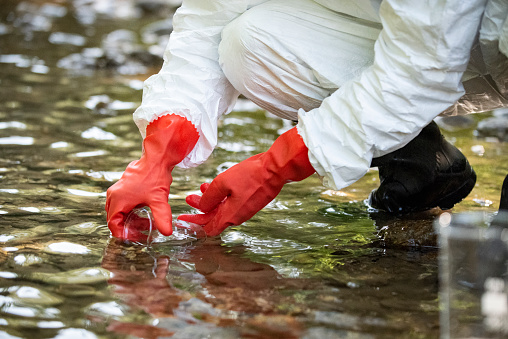
Toxic tort cases arise when an entity’s negligent actions or inaction contaminates the air, soil, or water, resulting in exposure-related injuries or illnesses. At the heart of these lawsuits is the principle that corporations, manufacturers, and agencies have a responsibility to prevent chemical spills, improper waste disposal, or other environmental pollutants from threatening public safety and health.
Individuals impacted by ecological or chemical exposure may have the right to file a lawsuit against the negligent parties. Toxic tort law firms help their clients confront a corporation or agency that produced a harmful substance, polluted the environment, or failed to warn consumers of potential hazards—and hold them responsible.
Legal Foundations of Toxic Torts
In its simplest form, a tort is a civil wrongful act that causes harm to another person. Toxic tort cases are legal claims that involve exposure to a hazardous compound or substance. Toxic exposure can result from the negligent use of a contaminant, poor chemical handling or disposal, a failure to warn end users of hazards, or production and distribution errors. The manufacturer, seller, corporation, or agency responsible for the danger may be liable for physical, financial, and emotional damages.
Linking Exposure Injuries to Products and Substances
Proving a toxic tort case requires connecting the dots between a person’s injury or illness and a substance known to cause those health conditions. The burden of proof in chemical exposure lawsuits falls on the plaintiff in these two areas:
1 | Establish General Causation
A chemical exposure lawsuit must prove that a substance is capable of causing the injury or illness central to the case. This is known as general causation.
2 | Demonstrate Specific Causation
Attorneys at a toxic tort law firm must also show a causal relationship between a person’s harm and the substance. The plaintiff’s exposure to the toxin must have a causal link to their illness or health condition.
Challenges of Causation for Toxic Torts
While the premise of a chemical exposure lawsuit may seem straightforward, these claims can vary depending on the substance in question, the method of exposure, the resulting injuries, and the timeline. Each scenario may introduce challenges for a toxic tort law firm to overcome while pursuing a claim, including:
Corporate Pushback
Chemical exposure lawsuits affect a business’s bottom line, causing reputational damage and financial burdens; corporations and agencies facing liability claims will try to refute evidence to escape responsibility and maintain their profits. Polluters and defective product manufacturers may try to blame a person’s injury or illness on pre-existing conditions, lifestyle choices, or other environmental exposures. Stakeholders may also attempt to conceal studies, internal documents, and communications to prevent individuals from revealing the extent of their actions and inactions.
Latency Periods
Most toxic tort cases entail illnesses and injuries that don’t materialize for long periods after exposure. This delay complicates medical diagnoses. People who lived on a military base, college campus, or in a contaminated community may spend years trying to discover the root of their illness. Retroactive evidence-gathering for causation is challenging. Memories fade, witnesses are difficult to track down, and files related to the contamination event may have been corrupted. A manufacturer’s or corporation’s destruction of documentation and studies adds another layer to these discovery challenges.
Evidentiary Requirements
Attorneys cannot simply show a correlation between an event and an outcome—they must prove that a substance was more likely than not a source of harm. That’s why scientific evidence is often a foundational part of toxic tort cases. Attorneys must present concrete studies and obtain opinions from expert witnesses, for example medical doctors, chemists, or researchers, to satisfy causation for a judge or jury.
Multiple Liable Parties
It’s essential to sue all parties that contribute to your harm to make a full recovery. Discovering every entity with a role in the exposure event demands significant investigation. A toxic tort law firm might identify and name several defendants in a single claim, including:
- Chemical or substance manufacturers and distributors
- Manufacturers of machines or devices (a faulty respirator, or firefighter gear that contains PFAS, for example) that expose people to toxins
- Owners or lessors of contaminated premises
- Hazardous substance storage companies
All parties contributing to a person’s injury or illness may be named in a toxic tort case, owing the injured person retribution for physical, emotional, and financial hardships.
The Role of Toxic Tort Attorneys
To sue for chemical exposure, contact an experienced toxic tort attorney and share your story; they can evaluate your claim and begin an investigation. Bell Legal Group’s team includes a network of scientific, medical, and environmental experts who provide insights to guide legal strategy and strengthen your claim.
An experienced attorney can bolster the following elements in your toxic tort case:
Defining the Defendant’s Actions
Proving a polluter, hazardous substance manufacturer, or corporation acted ‘unreasonably’ or produced an ‘unreasonably’ dangerous product lies at the core of many toxic torts. An attorney can help define ‘reason’ concerning your case and gather evidence to prove that the defendant’s actions meet the legal definition of ‘unreasonable.’
Discovering Evidence and Managing Documents
Evidence collection and management are critical responsibilities for a toxic tort law firm. Attorneys understand that cases can be won in the discovery process. Gathering historical documentation, the latest research, expert opinions, or other support documents that demonstrate causation may yield millions of pages of potential evidence.
Case documents must be analyzed for evidence of concealed communications about hazard potential, pollution violations, and improper waste disposal methods, and then they must be cataloged. Since this evidence is essential to your toxic tort case, these steps are best left to a law firm equipped to handle large-scale document management.
Protecting Your Rights
Going up against a big corporation, agency, or the Government isn’t easy, especially without legal backing. An attorney can safeguard your rights to a jury trial and protect your interests as you seek damages in a toxic tort.
Litigation involving chemical, biological, or environmental toxins requires help from an experienced law firm. Having the right support behind you can prevent an entity from minimizing your experience, so all your damages are recognized. Our attorneys are here to listen. Contact us and share your story so we can help you understand your options for a chemical exposure claim.